My Vertical Garden Wall

Showing posts with label Cane Begonia - ID. Show all posts
Showing posts with label Cane Begonia - ID. Show all posts
Sunday, April 12, 2020
Begonia Collection - April 2020 Update
This is my update since Dec 2019.
Most of the begonias did not survive due to the rodent attack - the ones managed to survive - thrived and I consider them hardy begonias - these are the ones I had cultivated successfully so far.
In this collection - I had placed them in mop wick system. Earlier I had few water cistern containers - 1 on semi-shade and 2 on total shade - the ones on total shade had become a failed experiment but the the one that received partial sun does so well.
The one on the Water Pot (Aquaponic Mop-wick system)
Here in this set-up are :
Begonia Chivalry, Begonia Black Knight, Begonia Fireworks, Begonia Fire Flush,
Begonia Silver Limbo, Begonia Jolly Silver, Begonia 'Lalomie', Begonia - U578, Begonia - U514, Begonia - Luzonensis,
Begonia growing on Soil Medium:
Begonia - U497, Begonia - Bethlehem Star, Begonia - Martin Mystery, Begonia - Floccifera, Begonia - U309, Begonia - Speculata, Begonia - Candy Stripe, Begonia Art Hodes, Begonia - Phuthoensis, Begonia - Manaus, Begonia - Silver Jewel,
Lettuce Leaf Begonia (Begonia 'Erythrophylla Bunchii'), Begonia - Acetosa.
Cane Begonia Types:
Begonia Aya, Cane Begonia - Bushing Bush, Cane Begonia - Maculata wightii,
Cane Begonia 'Albo-picta', Cane Begonia - Borneensis, Cane Begonia - Coccinea,
Cane Begonia 'Albo-picta var rosea', Cane Begonia - Lucerna & Cane Begonia - Torch Red

Sunday, December 1, 2019
42 Different Types Cane Begonias (Name & Images) Latest Updated on 9th July 2024
CANE BEGONIA UPDATE : 9th July 2024
I have found after years of experience that there are difference between Cane Begonia species where there are some that can last for many years in basic care maintenance types and there also that punish you with them perish when you make a silly mistake.
I can say, all in all.
Begonia are indeed fussy plant but however - you can still manage to keep them for at least 1-2 years with minimum care: that is basic watering perhaps 3 days to a week irregular watering regime.
Another factor that I notice why Cane Begonia perish is their maintenance of constant pruning and propagation requirement - otherwise they do get leggy, matures and perish due to old age. At times, I often notice that there are sign where a dried off portion at the stem near the base of the plant - and the plant switch to a succulent zone type of behavior - change of foliage color and an appearance where it is more burgundy tones - after inspection, I end up noticing this phenomenon where the plant dries up at mid center without any warning.
To avoid this - I often have spares : propagating them in short stem and in hanging basket - keeping them tight as these seems to love to have a tight root-ball growth spacing.
I can say, all in all.
Begonia are indeed fussy plant but however - you can still manage to keep them for at least 1-2 years with minimum care: that is basic watering perhaps 3 days to a week irregular watering regime.
Another factor that I notice why Cane Begonia perish is their maintenance of constant pruning and propagation requirement - otherwise they do get leggy, matures and perish due to old age. At times, I often notice that there are sign where a dried off portion at the stem near the base of the plant - and the plant switch to a succulent zone type of behavior - change of foliage color and an appearance where it is more burgundy tones - after inspection, I end up noticing this phenomenon where the plant dries up at mid center without any warning.
To avoid this - I often have spares : propagating them in short stem and in hanging basket - keeping them tight as these seems to love to have a tight root-ball growth spacing.
I do notice that there are different climate zone types.
Often the Highland types are much sensitive and require more plant care in comparison to the lowland climate types.
Often the Highland types are much sensitive and require more plant care in comparison to the lowland climate types.
These cultivars are famously known as Angel wing Begonia or Dragon wing Begonia.
Basically they are very similar but identified by the shape of the leaves and the colors of the flowers.
They have this appearance like bamboo stalks especially when the stem grows taller,
hence it's known as Cane Begonias.
Some Begonias have this Bamboo stem like features where it can have a upright standing feature with a bunch of leaves and flowers at the top. This particular arrangement is known as Tamaya.
The only thing that adds to the confusion is that you can do such arrangement with most of the Cane Begonia cultivar.

Some Cane Begonia has this specks /spots on the leaves and they tend to disappear when the plant becomes mature. It's only strongly visible when the plant is young.
Also the spots seemed to have the iridescence metallic sheen,
sort of gleams when observe in an angle.
However, there is no way can anyone come to any conclusion to 100% identify that this is the exactly the said ID begonia as the mix cultivation and hybrids were done with too many occurrence with other growers that there is no way to keep a track record of their names or ID.
Here in the list however are just the basic types that are commonly available and their ID is based on these relevant able information.
CANE BEGONIA CARE:
Most Cane Begonia types can be considered hardy compared to other foliage types.
These are much stronger and have a better resistance towards the harsh weather.
They may able to tolerate hotter climate and over-watering. These makes them more popular as they are also more showy on their beautiful flowers compared to the foliage types (Rex Begonia types)
They do require a stake or a pole to keep them upright or else they will fall by their own weight.
Their roots don't go deep and therefore - good care is required to ensure they are not over watered as if the root rot occurs - it would be too late to safe them.
It is therefore best to keep the plant just around waist level by pruning.
The cut stem can be used for new plant propagation as these cane begonias
don't seemed to last more than 2 years.
Failure to do so and you might find that they tend to die suddenly as you find all the leaves fallen away and what's left is succulent like stem and branches. You can prune and replant them but if you rot at the base of the stem - it's most likely that the plant is dying & chances of reviving it is extremely slim.
SOIL MEDIUM:
The best I had found so far is using more of a fast draining medium.
I find sand works best - at least 50% of the portion of sand mix with ordinary potting medium, if this is not found another alternative would be 1/3 (perlite) 1/3 (potting mix) 1/3 (succulent/cactus mix)
This is to ensure that it has a rich medium which also fast draining.
Currently I have been experimenting using coconut chips sandwiched in between the root-ball and layer the whole pot with river sand as to create a very well drainage potting medium which proves adequate for a suitable medium for them.
Water logged medium especially clay types or any water soaking medium are not recommended as these can cause root rot and can be detrimental for the begonia.
I sometimes find cocopeat used as medium when purchasing these plant from the nurseries.
I believe these are good for initial propagation for root development but I doubt it can able to stand on long-term basis especially when the plant matures and grows bigger.
That's why these plants don't last long when they are not replanted & the soil medium changed.
WATERING:
Also do not allow it to completely dry out before watering.
Sometimes they can tolerate to this kind of watering but if you missed the most crucial moment,
the plant can succumb to over stress and may not recover at all.
Especially if the stem started to dry out in between the nodes
(which can happen even on ordinary conditions)
The begonia will revert as if it is a succulent plant and becomes dormant.
You have no choice but to prune and replant the plant and hope it revives back.
I had lost few species because of this condition as the cuttings did not take root.
FEEDING / FERTILIZER REGIME:
It is best to identify what is best fertilizer that works for them by slowly introducing the fertilizer using a smaller dosage. After observing at each week and see if the plant is stressed or thriving.
As too much strong fertilizer for this particular type can burn the leaves and so care is required when feeding this plant.
SETBACK:
Just like any begonias,
Cane Begonias are very sensitive to fungus attack and rot.
If there is any sign of rot taking place - immediate action is necessary or the whole plant is lost.
That's why, I always emphasis always to have at least a spare plant from the cutting / pruned from the mother plant as these are sensitive and may die suddenly without giving any warning.
PROPAGATION:
Unlike other Begonia types, (where only leaf section is used)
Cane Begonias can only be propagated using stem propagation.
And therefore, it is important to use a fresh cutting that is without any rot or fungus attack.
Some begonias are very strong that you can easily root them by placing the stem in water but not all works in this situation as sometimes they may root but may not survive once transferred into a soil medium.
LIST OF CULTIVARS OF CANE BEGONIAS:
There are no way can anyone come to any conclusion to 100% identify
that this is the exactly the said ID begonia
as the mix cultivation and hybrids were done with too many occurrence with other growers
& that there is no track record for reference on their names or ID.
Here in the list however are just the basic types that are commonly available
and their ID is based on these relevant available information.
Water logged medium especially clay types or any water soaking medium are not recommended as these can cause root rot and can be detrimental for the begonia.
I sometimes find cocopeat used as medium when purchasing these plant from the nurseries.
I believe these are good for initial propagation for root development but I doubt it can able to stand on long-term basis especially when the plant matures and grows bigger.
That's why these plants don't last long when they are not replanted & the soil medium changed.
WATERING:
Also do not allow it to completely dry out before watering.
Sometimes they can tolerate to this kind of watering but if you missed the most crucial moment,
the plant can succumb to over stress and may not recover at all.
Especially if the stem started to dry out in between the nodes
(which can happen even on ordinary conditions)
The begonia will revert as if it is a succulent plant and becomes dormant.
You have no choice but to prune and replant the plant and hope it revives back.
I had lost few species because of this condition as the cuttings did not take root.
FEEDING / FERTILIZER REGIME:
It is best to identify what is best fertilizer that works for them by slowly introducing the fertilizer using a smaller dosage. After observing at each week and see if the plant is stressed or thriving.
As too much strong fertilizer for this particular type can burn the leaves and so care is required when feeding this plant.
UPDATE 2021 - REVIEW
1) STOP USING WOOD VINEGAR - KILLS THE PLANT
2) STOP USING MIXED FERTILISERS IN ONE MIX.
3) STOP USING OSMOCOTE - BURNS PLANTS
- I have found that slow release fertilizer as such as these do not do well in constant moist, wet type of medium as they are exposed to daily watering or even rain for the matter in my garden conditions.
- I have found that slow release fertilizer as such as these do not do well in constant moist, wet type of medium as they are exposed to daily watering or even rain for the matter in my garden conditions.
OTHER WORKABLE FERTILISER:
I had checked and done some research with other successful begonia growers and had found that they find these works best in their garden condition. I must say that different garden have their specific garden conditions and finding the right feeding solution as what works best in their own garden.
There are other successful fertiliser regime:
6) CHICKEN MANURE
7) COFFEE BASED FERTILISER
8) ORGANIC LIQUID FERTILISER
As for now (Update Nov 2022)
I'm currently using weakly weekly foliar application of NPK that been using for orchids in powdered form. 1 tablespoon for a bucket of water. This ensures that the plants are not burned but just receives enough nutrients for it to grow nicely.
Just like any begonias,
Cane Begonias are very sensitive to fungus attack and rot.
If there is any sign of rot taking place - immediate action is necessary or the whole plant is lost.
That's why, I always emphasis always to have at least a spare plant from the cutting / pruned from the mother plant as these are sensitive and may die suddenly without giving any warning.
PROPAGATION:
Unlike other Begonia types, (where only leaf section is used)
Cane Begonias can only be propagated using stem propagation.
And therefore, it is important to use a fresh cutting that is without any rot or fungus attack.
Some begonias are very strong that you can easily root them by placing the stem in water but not all works in this situation as sometimes they may root but may not survive once transferred into a soil medium.
LIST OF CULTIVARS OF CANE BEGONIAS:
There are no way can anyone come to any conclusion to 100% identify
that this is the exactly the said ID begonia
as the mix cultivation and hybrids were done with too many occurrence with other growers
& that there is no track record for reference on their names or ID.
Here in the list however are just the basic types that are commonly available
and their ID is based on these relevant available information.
👇 Do click on their Names for more Detailed Information
about the Cane Begonia on Pictures Below 👇


(New Improved Tips & Hacks)


Here is a review of some of my Cane Begonia Collection
where it is more on the emphasize concerning their flowering characteristics.
Most of them are not profoundly showy however they have this unique features where the buds are very much in heart-shaped.
Do check out the characteristics of the 4 Cane Begonias here in this video:
1) Cane Begonia - Maculata (Original)
2) Cane Begonia - Pink Rubra
3) Cane Begonia - Maculata Albo Picta
4) Cane Begonia Sinbad




What I’m showcasing here are the few types of Cane Begonias which I currently cultivating:
Cane Begonia Collection:
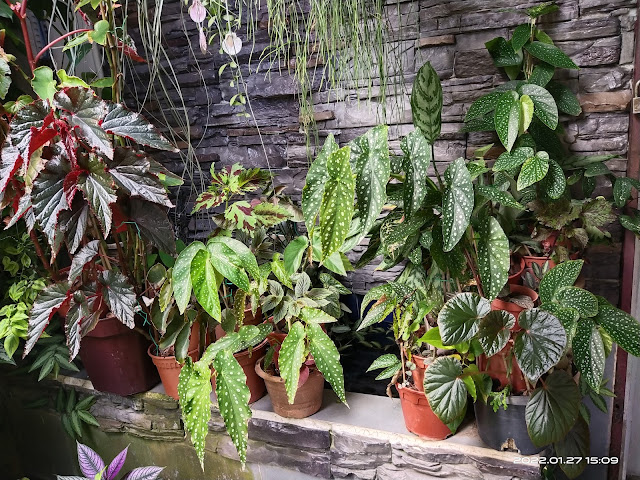
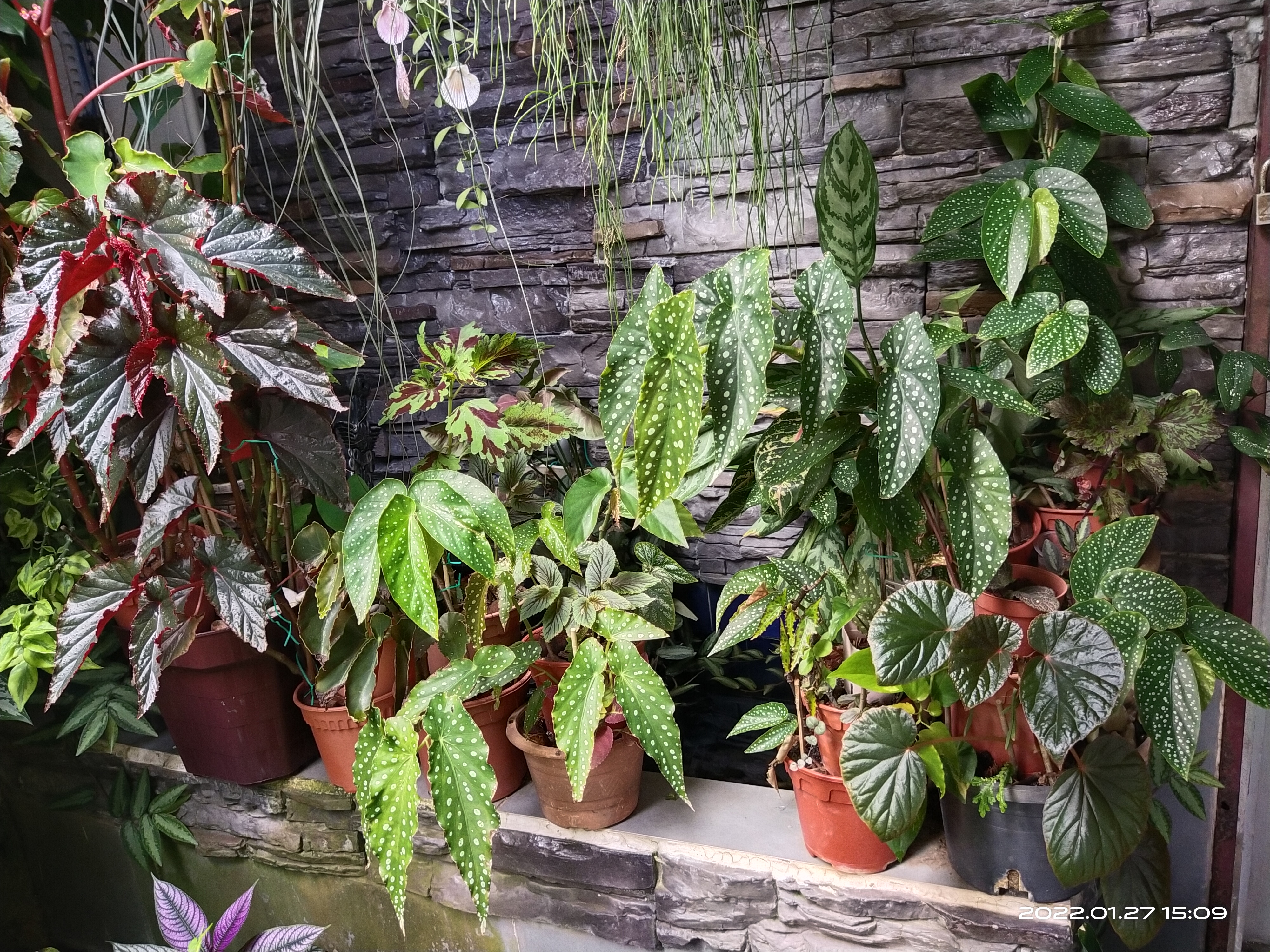
Begonia ‘Aya’, Cane Begonia ‘Maculata wightii’, Cane Begonia Hybrid ' Mrs Hashimoto X Maculata wightii, Cane Begonia 'Albo-picta', Cane Begonia ‘Lucerna’ & Cane Begonia ‘Torch Red’.
My focus here is to show their Polka Dot features on their Foliage Structure.
I had just repot them today just before taking this video. As they are too small and the roots are coming out from their drainage holes. These are cultivated in semi shade area with light daily watering.

Quick Care Tips for Cane Begonias Collection - Part 3


MORE UPDATED INFORMATION:
One of the challenges concerning begonias are actually keeping the begonias alive. I had experienced countless times where a healthy begonia just succumb and fall apart like a domino effect either to root rot or stem rot - of course the next ideal thing to do to immediately take cuttings and replant the stem only to see the whole plant fall apart in pieces one leaf at a time. Before you know it - it had just disintegrated into a begonia rotting soup.
Check this post for more information:
How to Repot Begonia to Correct Potting Medium
How to Repot Begonia to Correct Potting Medium
Quick Care Tips for Cane Begonias Collection - Part 1
This is my Quick Care Tip on How I Care & Cultivate my Cane Begonia Collections:
Tip : Stake Up the Cane Begonia.
This ensure the Begonia to grow upward and not break down by it's own weight.
Here in this video - I will be showing the types of materials I use for this purpose.
Quick Care Tips for Cane Begonias Collection - Part 2
This is my Quick Care Tip on How I Care & Cultivate my Cane Begonia Collections:
Tip : Double Stacked Potting Style
This ensure the Begonia to does not succumb to root rot due to overwatering or too dry medium, creating a balanced moisture in the soil potting medium. Here in this video - I will be showing the types of materials I use for this purpose
Quick Care Tips for Cane Begonias Collection - Part 3
Here I want to emphasize of the importance of humidity - and the lack of it causing burns on the leaves. This is very much up Cane Begonia Update of the Plant Growth from my earlier videos.

Subscribe to:
Posts (Atom)
About Me

- James David
- Tropical Garden, Batu Caves, Malaysia
- My Malaysian Tropical Garden mainly focused on unique and colorful plants ranging from rare to common plants all around the tropical belt across the world. Ideal for inspiration for challenging areas in the garden space - indoor gardening, balcony gardening and small green spaces especially for ariods, bromeliads, begonias, edibles, cascading & vertical garden plants, succulents & cacti, orchids, together with both shade and sun loving plants.
Popular Posts
-
 My Garden is slowly settling to its permanent position where I'm going to maintain what I have currently. The best idea in keepi...
 -
 I had wanted to list all the begonias and their ID with images here. Somehow it will be overwhelming to put the whole genes here which ...
 -
 CANE BEGONIA UPDATE : 9th July 2024 I have found after years of experience that there are difference between Cane Begonia species where ther...
 -
 Most of my friends asked me about where I purchase my plants. I often tell them about this very famous nurseries, the ones located in Sg....
 -
 INTRODUCTION: To have or not to have. What if all the neighbors around your surrounding area plants this same plant, Would you consider ...
 -
 I would like to introduce a New Series on Indoor Plants and hope to come up with 10 Best Indoor Plants for Beginners. I'm guessing...
 -
 INTRODUCTION: Jasminum sambac commonly known as Grand Duke of Tuscany Jasmine especially this particular variety where it is famously know...
 -
 I had wanted to list all the Episcia and their ID with images here. Somehow it will be overwhelming to put the whole genes here which will ...
 -
 It was one of my zealous moments where I have decided to just go and see whats happening in this Orchid Garden. Its situated inside KL Lak...
 -
 I have come across many gardeners who had stopped gardening for the fear of mosquito's. Though it sound like a laughing matter but not s...
Popular Post - 1 Month
-
 INTRODUCTION: Combretum indicum / Quisqualis indica is commonly known as Rangoon Creeper Vine is a tropical vining plant that is native to A...
 -
My Garden is slowly settling to its permanent position where I'm going to maintain what I have currently. The best idea in keepi...
-
CANE BEGONIA UPDATE : 9th July 2024 I have found after years of experience that there are difference between Cane Begonia species where ther...
-
 It is indeed amazing that these red ones actually dwell in my garden invisibly. You may have to seek them out with a dete...
 -
 A Gardener's work is never done. Just when I thought I was almost finished and getting into the satisfaction of...
 -
 If you had fallen in love with Earthstars, you would definitely understand my passion concerning them. They are jus...
 -
I had wanted to list all the begonias and their ID with images here. Somehow it will be overwhelming to put the whole genes here which ...
-
INTRODUCTION: Jasminum sambac commonly known as Grand Duke of Tuscany Jasmine especially this particular variety where it is famously know...
-
 I must say that this was one of the plants that I had cultivated when I first began gardening. It was very much my first experiences, t...
 -
 By Definition - it is a bit difficult to determine it's common name as it is very closely named with Night Blooming Jasmine which is tot...