INTRODUCTION:
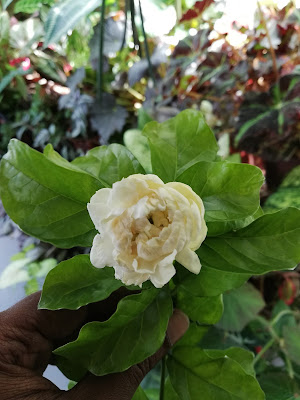
Jasminum sambac commonly known as Grand Duke of Tuscany Jasmine especially this particular variety where it is famously known as Rose Jasmine. It is also known as Sambac Jasmine or Arabian Jasmine.
This tropical plant is native to Asia from surrounding regions of India to South East Asia and also found in other parts around the tropical regions where it had been cultivated and introduced as ornamental plant.
It has exactly all the characteristics of a common jasmine, only thing is the flower is grander and the fragrance stronger. Like most jasmine - this particular one is a nocturnal bloomer and the fragrance last till the next day however the blooms does get spend after few days withering away on the stem.
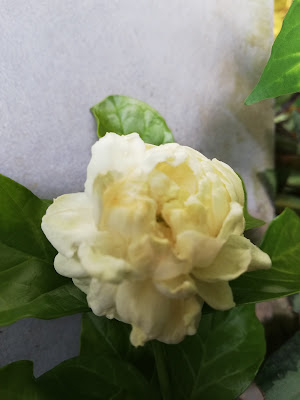
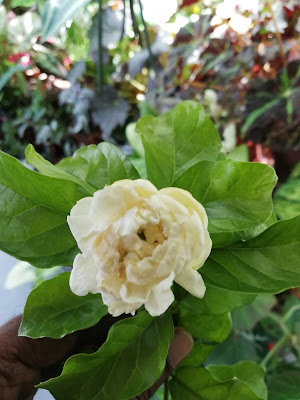
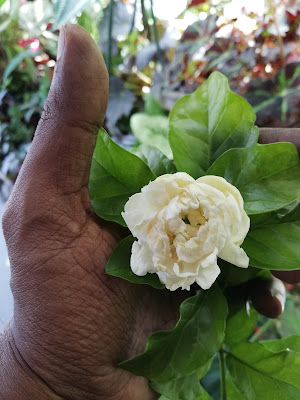
Unlike most common Jasmine plant where the flower is in one layered petaled, this one have multi-layered like a rose. In the beginning I thought that I was not the fan of jasmine (Didn't like the way the plant, too bushy and all leaves with few flowers)
I changed my mind when I saw this particular Jasmine, it look exactly like a Rose. I bought this plant about RM10. Didn't mind that as it was rare to get this type around. After sometime this jasmine got settled and gave few new shoots with buds.
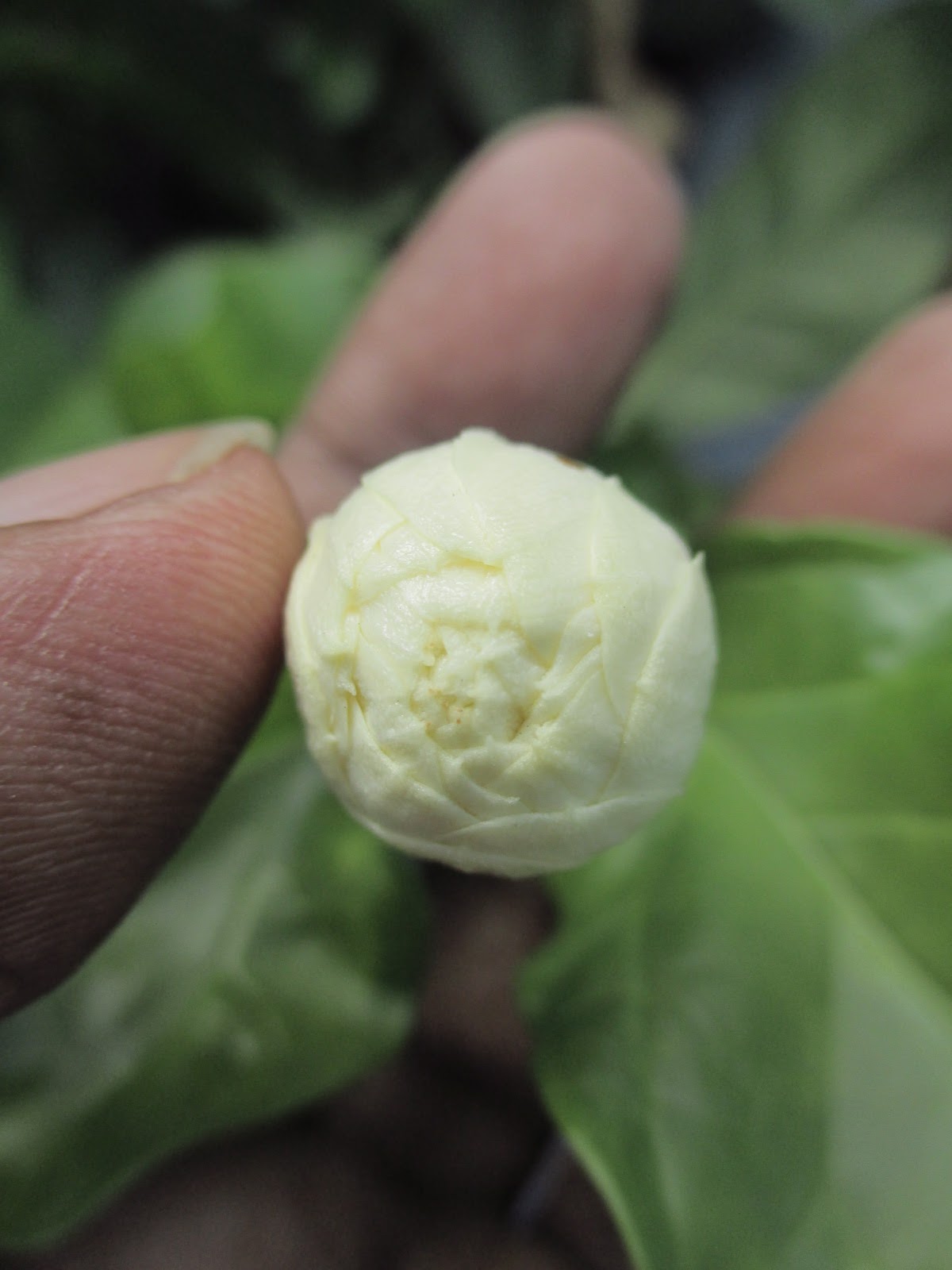
I was keeping watch of the bud development as you can see here from a tiny shoot to full bloom flower.
Below are the pictures of the Rose Jasmine Progression of Bud to Blooms:
LIGHT:
Being a Tropical Plant native surrounding regions of the Southern Asia - this plant does require good strong indirect bright sunshine, It can tolerate growing in shaded area however it must receive at least 6 hours of sunshine. It does not do well in heavy shaded area and may not bloom in such conditions. Also the leaves may turn yellow and also become leggy. Another factor in the lack of sunlight may cause the plant to become stress and can attract pest to heavily attack on them.
Hence do give a thought if you're not having open garden area as this would not so well as indoor plant - even placing them as a balcony potted plant can be challenging if they receive inadequate light.

SOIL MEDIUM:
Considering one of the most basic thing about planting material - this one doesn't require anything special - just any balanced potting mix will do. They seem to do fine in a medium or big potted plant - however they will do great if they are planted directly into the garden soil as these will require just that to create those majestic cascading blooms.
However if limitation occurs where you can only grow in pot - then a good balanced potting mix with rich amount of organic material and equal part of well drained soil which will help from root rot.

WATERING & FEEDING:
It may require a good adequate watering - both morning and evening based on the size of the plant.
You can grow it in a nice medium or large size pot, the plant will behave and grow based on the size of the pot. However I would recommend this to grow freely on ground if you want lushful beautiful rose like flowers.
Also this plant is a heavy feeder and do feed adequately during the flowering season.
However take note that over-watering can cause them to bud-drop especially during the rainy season, hence a well balance fast draining medium to ensure no root rot occurs.

PRUNING:
One of the most challenging part for this shrub is pruning. They do grow extremely fast and become very unruly if not proper care is not given - especially when it comes to growth factor, this plant focus more on branching more stem and over growth rather than blooms which can be one of the down-side coming from this ever blooming plant.
However with the right pruning method and keeping it trimmed and manageable size - this one can be such a beauty. As shown here - the appearance of the blooms can last at least for few months until the next pruning session is done to maintain the blooming cycle from interruption.
This consideration applies very accurately when the plant is matured and had grown for years - that is if it is not flowering in its full potential. Other factors involving lighting / watering / feeding is also essential and necessary.

PEST CONTROL:
I had found this one seemed to be a hardy plant with strong resistant to pest attack in comparison to many other floral plant. However at times mealybugs are found around the flowerbud farmed by ants and occasionally sap sucking insects too are found at the bottom of the leaves.
Occasionally I had come across that if the plant is anyway stressed or lacking nutrients may face some damage on it's foliage but rarely fatal to the plant.
Keeping the plant - Pruned and Compact does make the plant focused on its blooming cycle and also able to take immediate action if any unruly pest attack where pruning is much easily handled rather than spraying pesticide all over the plant.
Also I had found that caterpillars seemed to love the young tender shoots and buds that can cause considerable damage to the flowers - do keep an eye on butterflies when they visit on the blooms - most likely they may be laying eggs on them.
Apart from this factor, other matters are very much similar with most tropical garden plants.

PROPAGATION:Propagation can be done but stem cutting, stripping off the bottom leaves and poking it into a deep pot with a rich potting soil. Keep it in shade until you notice a new leaves growth.
Another method is to put the cutting into perlite medium (soaked in water)
Once taken roots, it should be carefully transplanted into a good potting mix.
Another option is to look out for a sucker that appears from the root base.
This happens if the plant is very established and has a huge root system.
Also I had noticed that this particular one can be very challenging to propagate if done wrongly - these are difficult to roots easily. Another alternative is seed propagation or marcotting - however it is too tedious that it would be much easier to just purchase the plant from a nursery that going through a lot trouble of trial and error in getting it right for the first time.

PLANT / FLOWER USAGE
This particular type has deep cultural roots throughout many cultures and traditions spanning around the Asian and South Pacific Region. Often adorned as a fragrant flower and very much prized for the aromatic flowers used for worship and for ceremonial uses especially the common type - this one is considered rare and not cultivated widely.
Historically these span over ages, In India and surrounding regions these flowers are venerated as sacred flowers. Jasmine Garlands are often used for weddings and funerals.
The floral named Jasmine comes from the Persian root word "Yasmin" meaning "Gift from God". There are much historic values as well as spiritual, cultural and medicinal which varies from culture to culture and may be identified much intently if proper research and study is done.
Also the flowers are also used as Jasmine Tea, essential oils and also as perfume as well as incense,


Like most Fragrant Flowers and especially this particular Jasmine where it does give that more grander version of any common jasmine - I would recommend that if you can get your hands on these - do cultivate to experience the mesmerizing sensation of the captivating fragrance. It is truly enchanting.
Also, Do click on the link below for more information on
Other Types of Tropical Fragrant Flowers: