Search This Blog

My Vertical Garden Wall

My Vertical Garden Wall

TRASLATION LANGUAGE (CLICK HERE)

Showing posts with label Tassel Fern. Show all posts

Thursday, April 23, 2020

10 Reason to Cultivate Cascading Plants.


I just love the way my garden progress itself in the cascading effect growth.
Somethings just can be predicted especially the lifespan of certain sensitive species plants like these tassel ferns - I had lost one particular species which had suddenly had root rot and the whole plant succumb to it's demise.

However, that's the life and times of a gardener's challenge. It is just that - nothing is permanent.
Life as it is - just go with the flow - some live and thrive and some just strive, succumb and fall away..
All part of gardening.


A lot of my gardening is very much trial and error.
And of a face value - a lot had suffered and died in my hands before I got it right. And so - it is important not to give up and slowly figure out what exactly works or doesn't work.

The reality is also knowing the limit. I for one accept my garden is a small spaced garden and therefore my limitation are challenging when it comes to space. Therefore - I cannot stress more on huge plants where they may need bigger space to grow unless I turn them into bonsai.


Another factor of these cascading plants are my pride and joy are the screen effect they give as such like a living "life curtain" and therefore giving me absolute privacy away from prying nosing neighbors. 

Also it keeps my home cool especially when I water the garden - sort of my mini-forest regulating my nature cooling effect. Again - its a good screen for dust - as these create a strong moisture screen and deter dust from entering the home.

So Here the List Goes:


No:1
Keeps the Cool during the hot and dry days. 

When watering the plants - these plants retain the water and regulate the cool temperature and also keeps the home cooler compared to the homes that do not have a garden (they may have to rely more on their air conditioning system of which may more on their electricity bill)


No:2
Oxygen Factory - Increase Immune System

There are not much study been done on this case especially where one person who lives in a green space filled with green plants and another without. I'm very certain the person who lives in the green space is very much healthy in all expects compared to the one that does not.

The plant does not only provide fresh oxygen but it is the very source itself that is much fresh and alive compared to an artificial one in a gas tank. 


No:3
Dust Screen Deterrent

I somehow find less dust comes into the home when these plants somehow create a screen like effect around my house entrance. Thus less dust and better air movement in my living.

I would recommend those who are suffering with breathing ailment like asthma should consider having a garden as such as this - to deter dust and allergies.


No:4
Privacy

I found this was great to create privacy in a tight space neighborhood. There was a time when I didn't have plants and everything that had been done at home is so visible except my curtains which was the only barrier and we often forget to draw the curtains. ( I let you have your imagination run wild)


No:5
The Green Effect of Nature - Keeps your Sanity

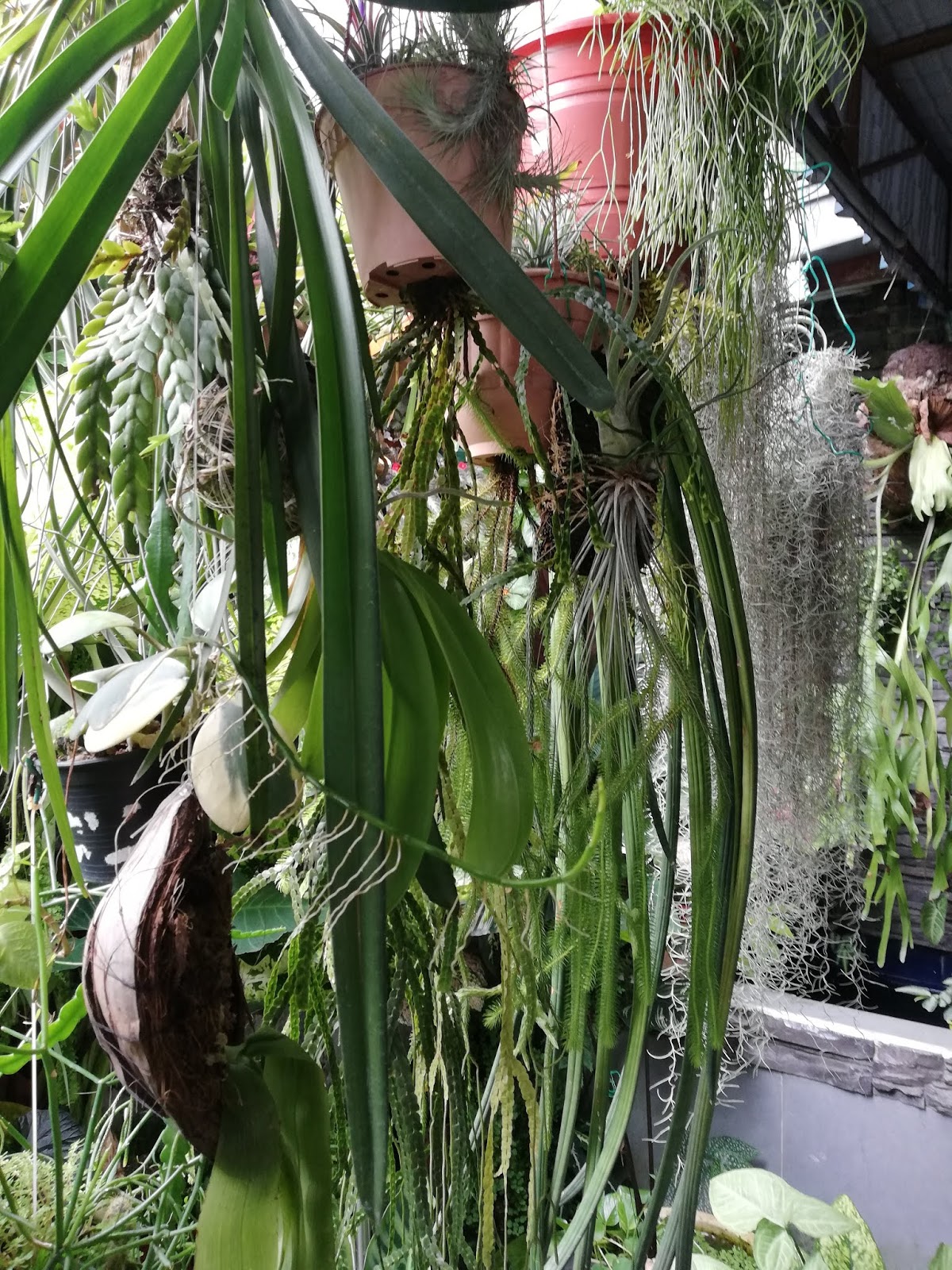
I wonder if you had felt healthier whenever you see green plants. I just go on my zone sitting by my couch seeing the green cascading plants from my living area. That fills soul - keeping one's sanity.
(especially during these MCO when you can't go out or outdoors - these green living wall really helps a lot)

No:6 
Enjoy Wildlife coming to the Garden

I wonder if you enjoy watching butterflies, the hummingbirds 
(in my case - sunbirds drinking nectar from the flowers) bubble bee buzzing around.
The chirping of birds and the burst of life - it is just an amazing feeling. 


No:7
Plants Cleans Polluted Air

Gardeners enjoy fresh clean air when they garden. Something that many don't get if they stay in a closed environment without any greenery. The fresh oxygenated air refreshes giving good strong lungs building a strong immune system


No:8
No Mosquito's - No Denggi

I heard so many people are so worried about mosquito's but found that those who suffered denggi fever seemed not to have a garden. That surprised me as I found that I rarely get mosquito's into my home.
Then I realized that the ecology outside somehow create a balance that everything of life stays outside.  

Also I had found that I have spider webs, dragonflies and praying mantis. 
That builds a strong ecology balance in my small spaced garden.

 No:9
Cultivating an Exclusive Garden Plants.

Unlike many simple gardens where plants are not well arranged where you not find a theme and in a way, array of all kinds of plants that fill up a garden space which may be OK for a beginner but not so appealing when you are really looking for an elegant feel.

These cascading plants are consider rare and difficult to cultivate but when come to place where you manage to cultivate it - it really gives a sense of victory, a success that heightens up the confidence level and gives that edge to push oneself for more challenges and press forward to become more successful in other areas in life.

No:10
They Reduce Stress

Finally,
All things said - I find that Gardening is Part and Parcel of Life.
Touching the Soil, Feeling the Plants and Watering is somehow create the wholesomeness in one's Life. There are more to be said and discuss when it comes to this but more than that.. It is more experienced and felt than reasoned.

I would say. Only a Gardener would understand this - a true gardener will not able to live if he or she stopped gardening. If that happens - it means that person had an emergency where other priority took precedence - (like had an accident, life changing matters) otherwise - It's all Gardening & Plants.

Sunday, February 23, 2020

How to Care & Cultivate Tassel Ferns


This particular type has a cascading effect where the plant rather grow downward instead of upward. It has a fern like feather where the often mistaken for a fern,
rather it is a fern ally closer to a moss genes.

Currently there is a huge classification ID brawl taking place on which one goes where. And so, these Huperzia & Lycopodium had it's names interchanged and reclassified the updated version is ignored by majority.


However, my concern is much more focused on the Care & Cultivation rather the identification. Therefore, Hope these details may help you - work out the necessarily information for best care for this plants.


FIRST THING FIRST:

I must ask you when you purchase this plant, in what condition did you receive it?
How did it come? 
Is it planted in a potting mix or a cocopeat?
Or is it rolled up tightly - its root-ball in a wire mesh?

I understand - if these were sold in a rolled wire mesh, chances are these were recently harvested in some forest or jungle and sold haphazardly without letting the ferns acclimated nor with suitable medium that would make this plant last even within few weeks.

MEDIUM:

COCONUT HUSK CHIPS.
I had tried few medium types and failed miserably, the fern fronds dried out crisp. Over the years of careful checking and planting I found the best optimum medium material:

Coconut husk chuck chips. You may personally have to collect the coconut husk yourself and trim them using scissors and cut them in small chucks. 

HANGING PLASTIC POT WITH A HOLE CUT OUT AT THE BOTTOM
You may also need a plastic hanging pot where you have cut of a considerable hole for the root ball to sit inside carefully and so the plant is planted upside down. This helps the water to drain out downwards while watering at the top of the pot.

Place the root-ball carefully inside and layer tightly with the coconut husk chips as so the root ball do not fall off from the cut out bottom side, you may tie it up with a wire or a string and fasten it together at the top to give it a support as it won't fall off later in the future.


WATERING

Watering is important. Do water it daily but make sure that it is fast draining. The coconut should able to hold the moisture for a day or so but it should not be too soaking wet (muddy wet that it can cause root rot) It should hold enough water that it dries out within a day.

The trick is not to let the root ball totally dried out before the next watering. If this occurs, you will notice the leaves start to loose color and may appear it's vibrant green slowly turning paper crisp and burn drying out. Sometimes, it may appear to be withering due to too hot and not enough water to co-op the water loss.

You can water it heavily from the top to bottom also spraying on the foliage. Continue to experiment and see how the plant handles it. If the plant is doing well, it will sprout out new shoots and often grow upwards.

If you have Rain Water. It would be the Best for this one.
Next option would be Filtered Water. Chlorinated water will cause this plant to burn at it edges.

LIGHT:

It requires few hours of sunlight, at least indirect bright light.
Does not do well in total shade with heavy dark areas.

I had placed saplings and they all slowly rotted and died.
I think due to - too wet and it had caused root rot.
Airy & brightly lit areas helps it to regulate this fern for better overall growth.


HUMIDITY:

This one does good with good humidity.
Placing this under a water body, like under a pond or below a water feature helps to regulate the humidity well and keep the greens well maintained.

FEEDING:

The best is dried banana peels on weekly basis.
I use to put in fresh banana peels but it had attracted fruit flies and worse squirrels and tree shrews that came investigating due to the aroma and wreck apart the crown and frond of this ferns.

Also, Foliar Fertilizer, spray weekly on half strength works best for this type of fern allies.


PROPAGATION:

I had totally missed out this one. Thanks Salie from Australia for pointing out this one.
Propagating this one is quite complex but not impossible - I had failed many times with few success that I had just left it to grow in their individual pot.

Method 1: Rootball Division.

The best chances of multiplying this particular type of Huperzia is to divide the rootball into few portion according to it's growth, similar like separating a fern root ball - just make sure there are fibrous roots attached to the stem as these can easily break off.

Method 2: Layering

This one is less risky - Lay the tip of the tassel fern frond into another potting medium and it will slowly sprout out new growth from there. It may be taking months to see visible successful growth but eventually the plant will start it's own colony from that connection.
This requires a lot of patience and sometimes even after many months - there can be no visible growth taking place.

Cuttings: Failed Attempt.
However based on my experience - cuttings seemed to be the most challenging endeavor and risky - I had not managed to get even one to grow as all of them succumb to rot or dried away.


This is based on my years of experience of care and cultivating these Tassel Ferns - the Huperzia species.


The ones that I currently care for: 

Huperzia phlegmaria

Huperzia nummularifolia

Huperzia squarrosa 

Huperzia carinata


And the one from the nursery: Huperzia goebellii


Here - I share the details: 


MEDIUM: 

I use Coconut chuck - chips which I had cut and placed them around the root ball.


WATERING: 

Once a Day - Just keeping them lightly moist but not over-watered as it can cause crown rot.

The Medium must be fast draining by the next day.


LIGHT: 

To be placed in an indirect shaded area. 

Too direct Sun can burn the foliage - Too shaded can cause plant stagnation and rot.


FERTILIZER: 

I use Osmocote as I find it is the best solution - other fertilizers tend to burn the plant.


PLACEMENT: 

Airy and good airy movement is good for the plant.


Huperzia is a sensitive plant and therefore good care is required. 

 Once it is established it is fairly easy to maintain in a long duration of time.


Saturday, February 17, 2018

Tassel Fern Update


So far this one survives well as I strictly only use water and no fertiliser regime.
They seemed to be so sensitive that I'm not taking any risk doing anything new on this.

I had checked through the website on this but had not found any information that talks about its exclusive care and how to lushfully grow this into a huge bush.
I guess - its secrets are yet to be revealed.


Sunday, November 26, 2017

Tassel Ferns - Huperzia & Lycopodium species


Huperzia phlegmaria
The closest common name I can get is Tassel Fern
But you know - its not even a fern.
This one - its the most difficult plant to keep -  had tried few times and it had died on me.
This was the last trial and I have learned my lesson.

I had cut out a pot and hanged it upside down and added coconut husk above it and only use water (never any fertiliser) so far it had survived and now doing somehow well.


Lycopodium nummularifolium
This one is very much another version of the cascading plants.
I had tried propagating it few times but failed in all attempts.
And anything new - well ends up in disaster.
So - I'm just leaving them as they are for now.


Any successful times and suggestions will be greatly appreciated for this kind.
Do feel free to share your thoughts on my comment box.

About Me

My photo
Tropical Garden, Batu Caves, Malaysia
My Malaysian Tropical Garden mainly focused on unique and colorful plants ranging from rare to common plants all around the tropical belt across the world. Ideal for inspiration for challenging areas in the garden space - indoor gardening, balcony gardening and small green spaces especially for ariods, bromeliads, begonias, edibles, cascading & vertical garden plants, succulents & cacti, orchids, together with both shade and sun loving plants.

Contact Me on the Form Above

Do put your queries on the contact form above and I will come back to you ASAP via e-mail. Also I'm open for any business / advertisement proposals / magazine articles / product sampling and sharing personal product experiences here in my blog. Also for specific plant queries where you need to send pictures for free consultation and plant help and aid.

Contact Form

Name

Email *

Message *

Blog Archive

Popular Posts

Popular Post - 1 Month